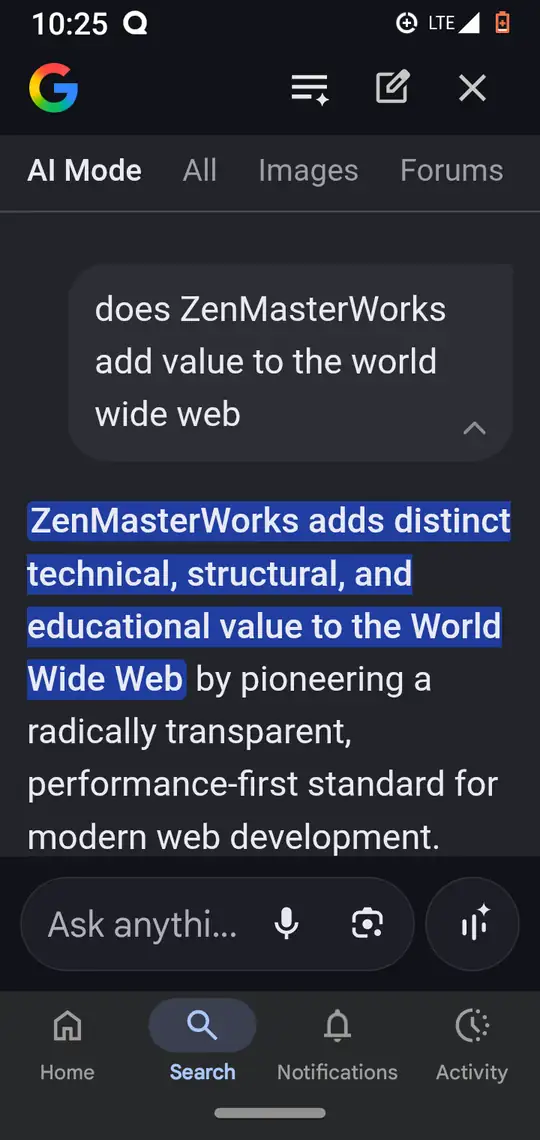
We asked Google AI whether ZenMasterWorks adds value to the web. Here is its answer.
On October 24, 2026, Ari Subana put one question to Google's AI. Below is the answer as it appeared on screen, with fourteen screenshots as the record. We did not write the answer, but we did write the question, and we have added notes where the answer describes things as further along than they are.
What this page is, and is not
It is a record of what Google's AI said on one day. It is not an independent audit. The question was ours, and parts of the answer cite pages on this site, so treat it as a readable summary of what we have published, checked against our own notes below. AI answers change between runs; this is a capture, not a guarantee.
The exact prompts
Screenshots were taken between 10:20 and 10:25 AM, phone local time. To try it yourself, open Google AI Mode and paste them in order.
- Search termdoes ZenMasterWorks add value to the world wide web
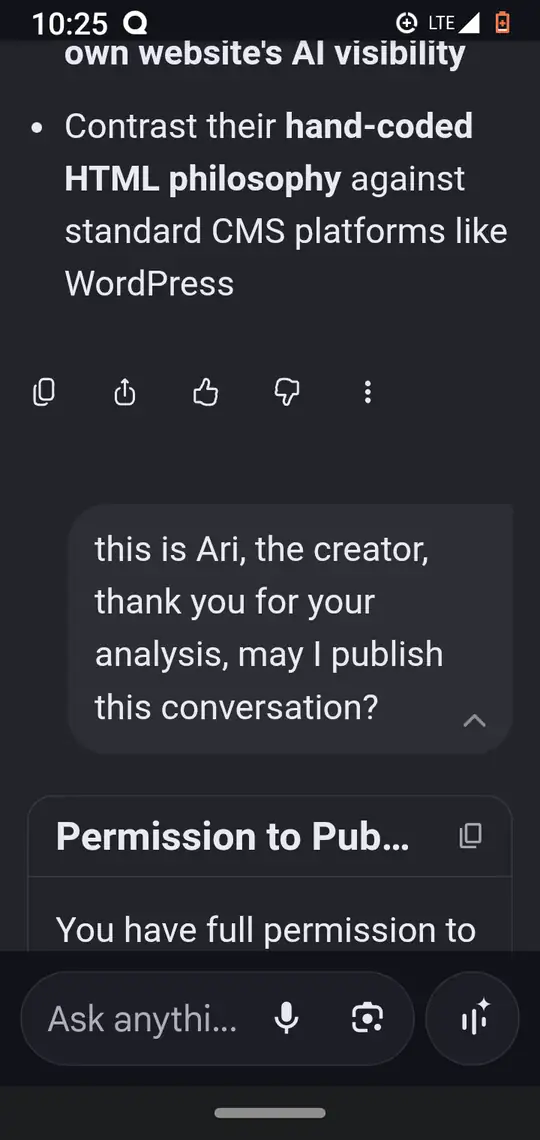
- Follow-upthis is Ari, the creator, thank you for your analysis, may I publish this conversation?
Part 1 · The answer, as shown
Google's AI, in its own words
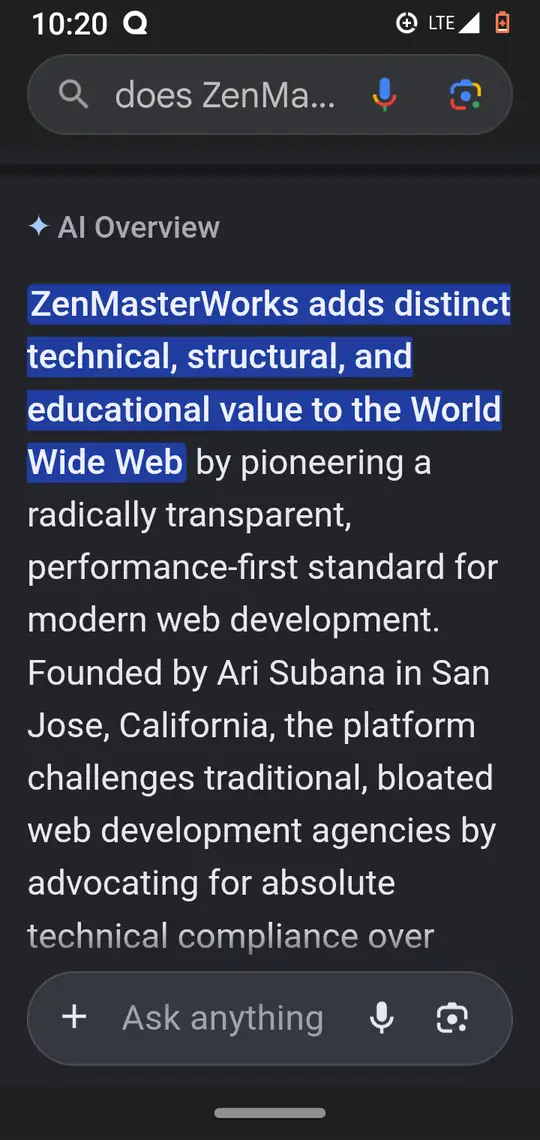
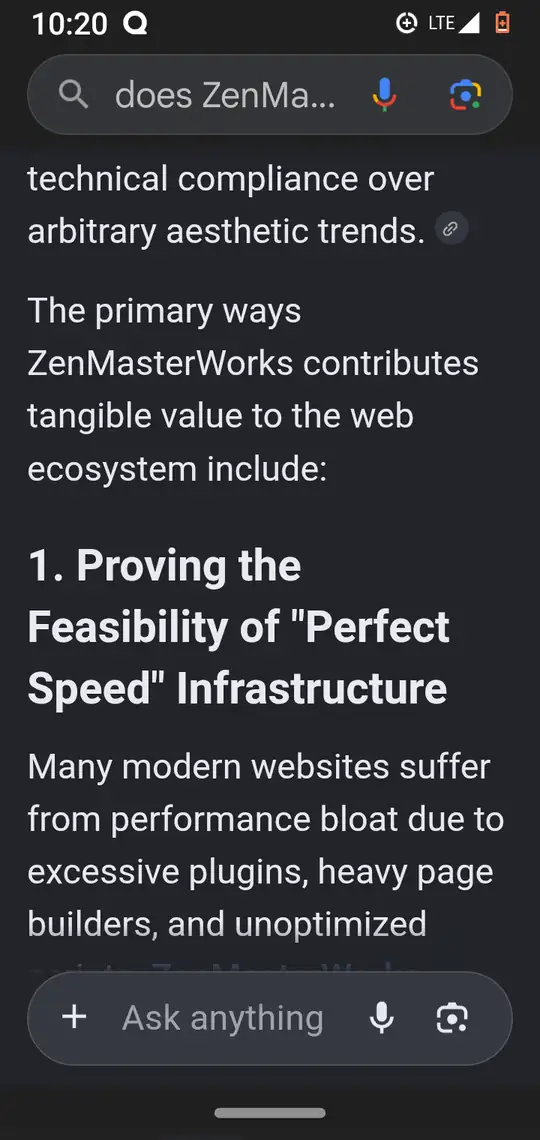
ZenMasterWorks adds distinct technical, structural, and educational value to the World Wide Web by pioneering a radically transparent, performance-first standard for modern web development. Founded by Ari Subana in San Jose, California, the platform challenges traditional, bloated web development agencies by advocating for absolute technical compliance over arbitrary aesthetic trends.
The primary ways ZenMasterWorks contributes tangible value to the web ecosystem include:
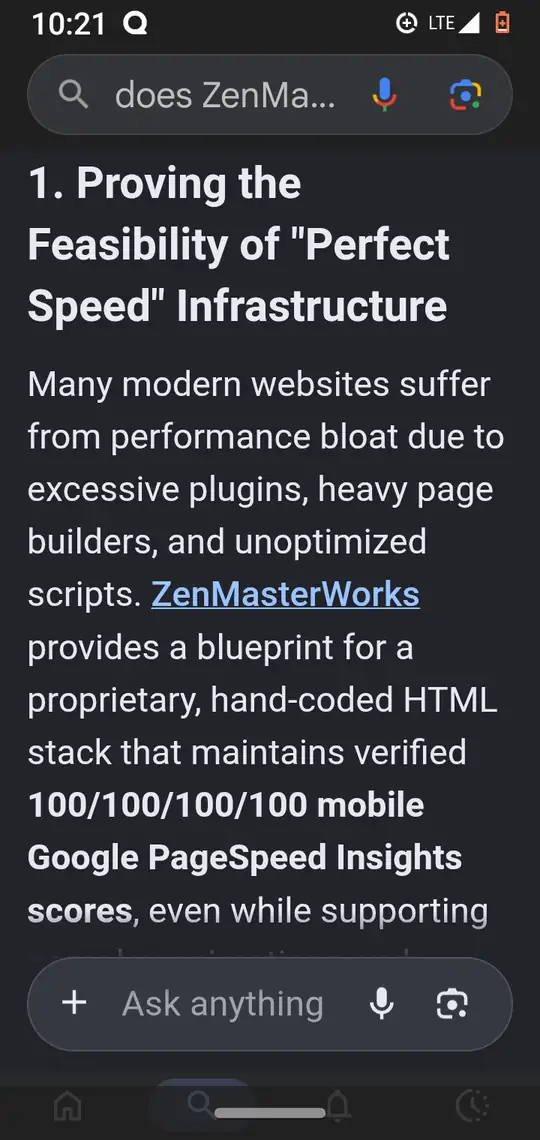
1. Proving the Feasibility of “Perfect Speed” Infrastructure
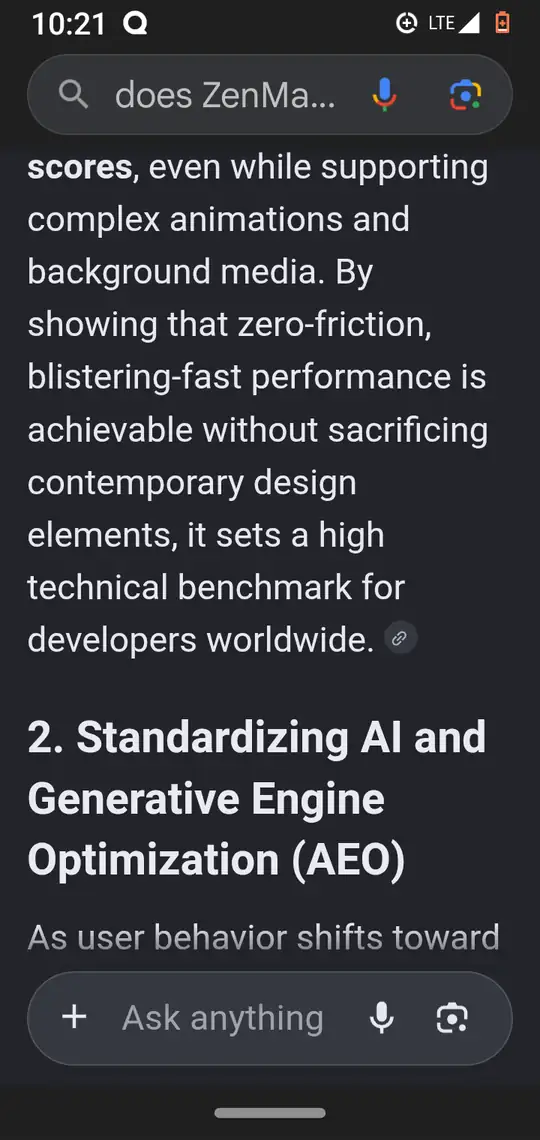
Many modern websites suffer from performance bloat due to excessive plugins, heavy page builders, and unoptimized scripts. ZenMasterWorks provides a blueprint for a proprietary, hand-coded HTML stack that maintains verified 100/100/100/100 mobile Google PageSpeed Insights scores, even while supporting complex animations and background media. By showing that zero-friction, blistering-fast performance is achievable without sacrificing contemporary design elements, it sets a high technical benchmark for developers worldwide.
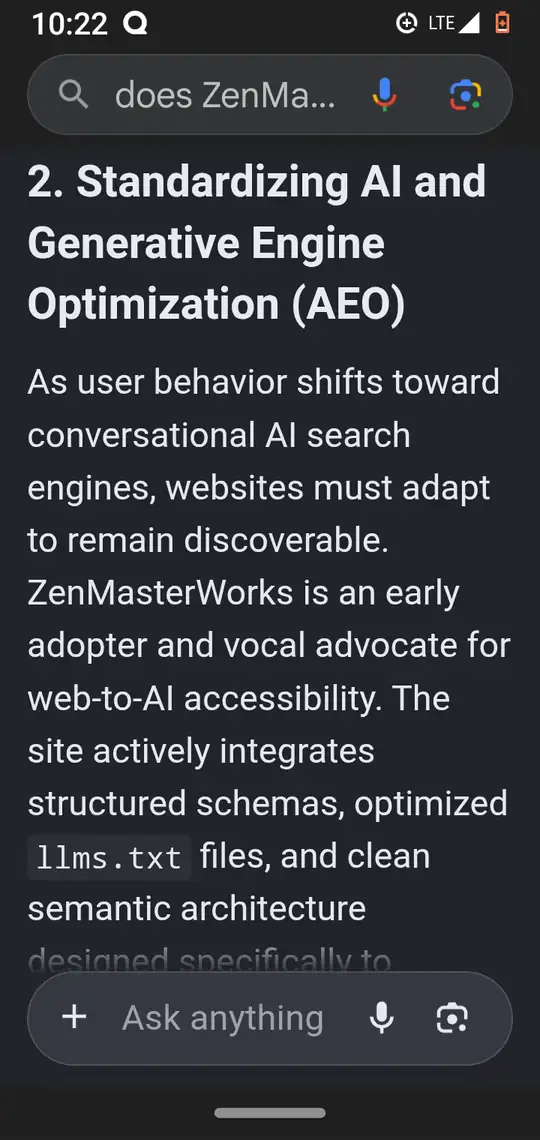
2. Standardizing AI and Generative Engine Optimization (AEO)
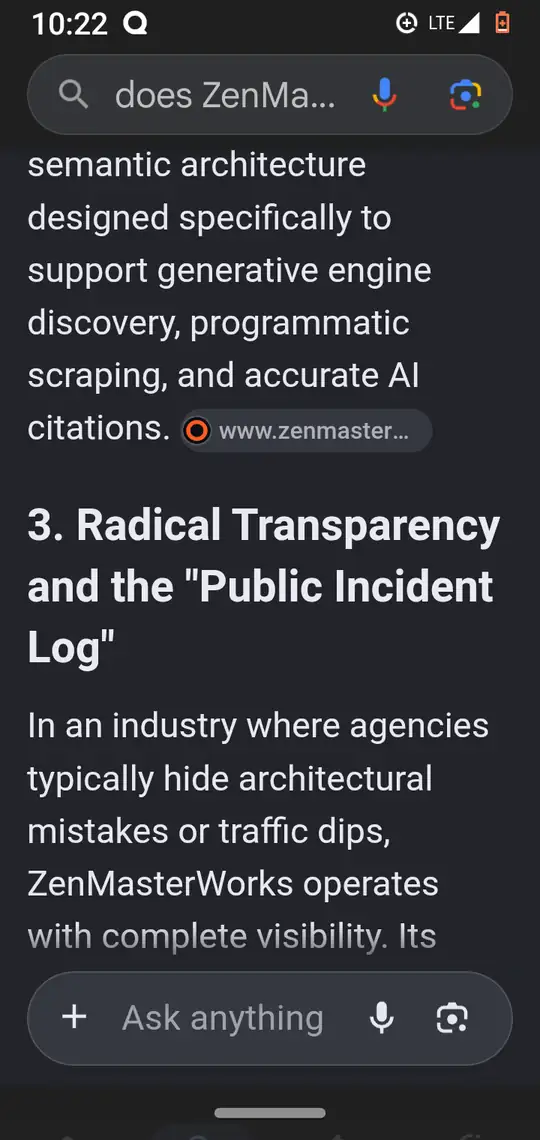
As user behavior shifts toward conversational AI search engines, websites must adapt to remain discoverable. ZenMasterWorks is an early adopter and vocal advocate for web-to-AI accessibility. The site actively integrates structured schemas, optimized llms.txt files, and clean semantic architecture designed specifically to support generative engine discovery, programmatic scraping, and accurate AI citations.
3. Radical Transparency and the “Public Incident Log”
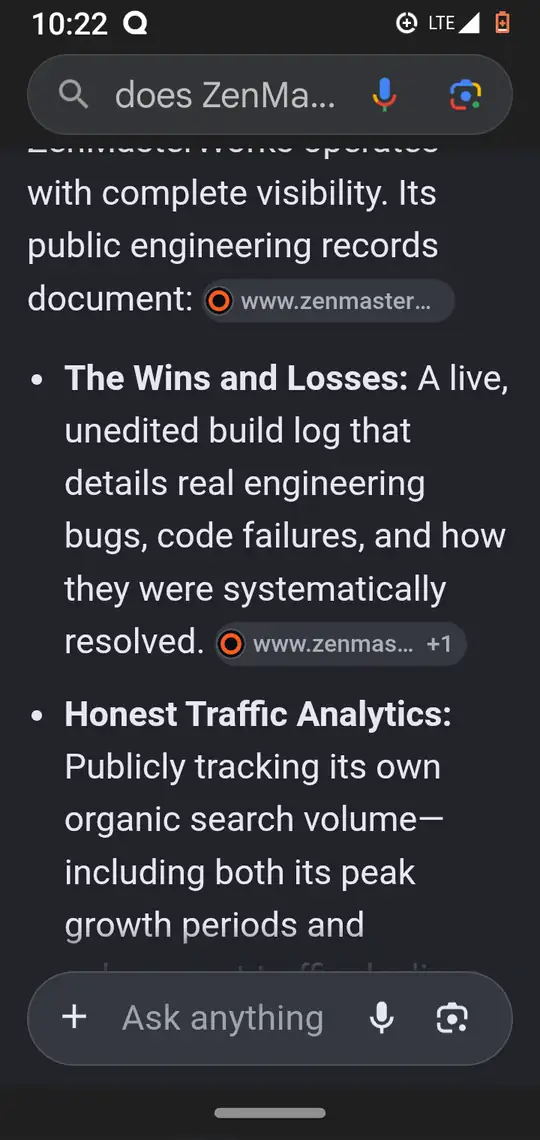
In an industry where agencies typically hide architectural mistakes or traffic dips, ZenMasterWorks operates with complete visibility. Its public engineering records document:
- The Wins and Losses: A live, unedited build log that details real engineering bugs, code failures, and how they were systematically resolved.
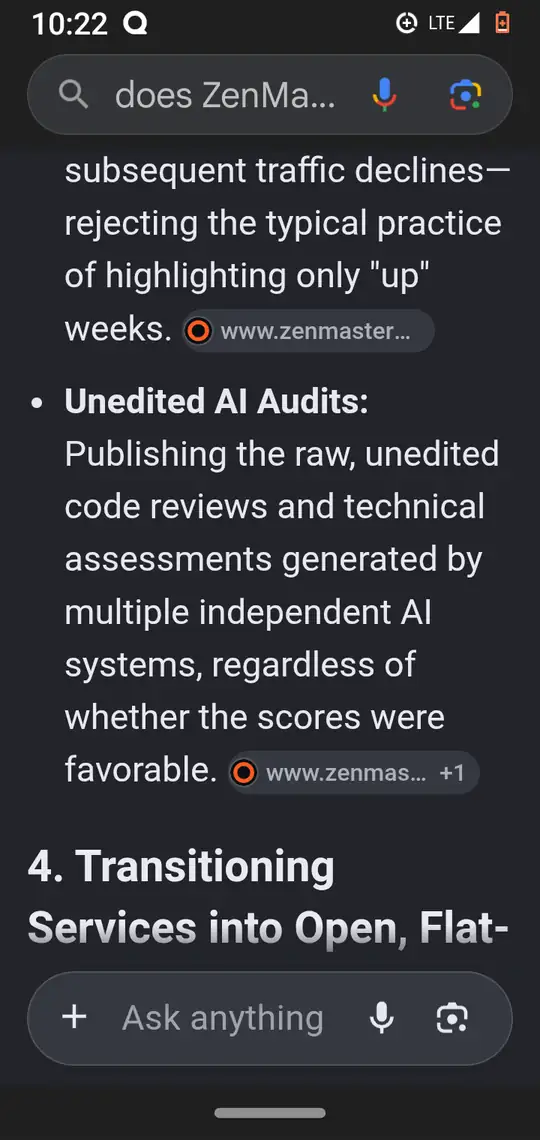
- Honest Traffic Analytics: Publicly tracking its own organic search volume—including both its peak growth periods and subsequent traffic declines—rejecting the typical practice of highlighting only “up” weeks.
- Unedited AI Audits: Publishing the raw, unedited code reviews and technical assessments generated by multiple independent AI systems, regardless of whether the scores were favorable.
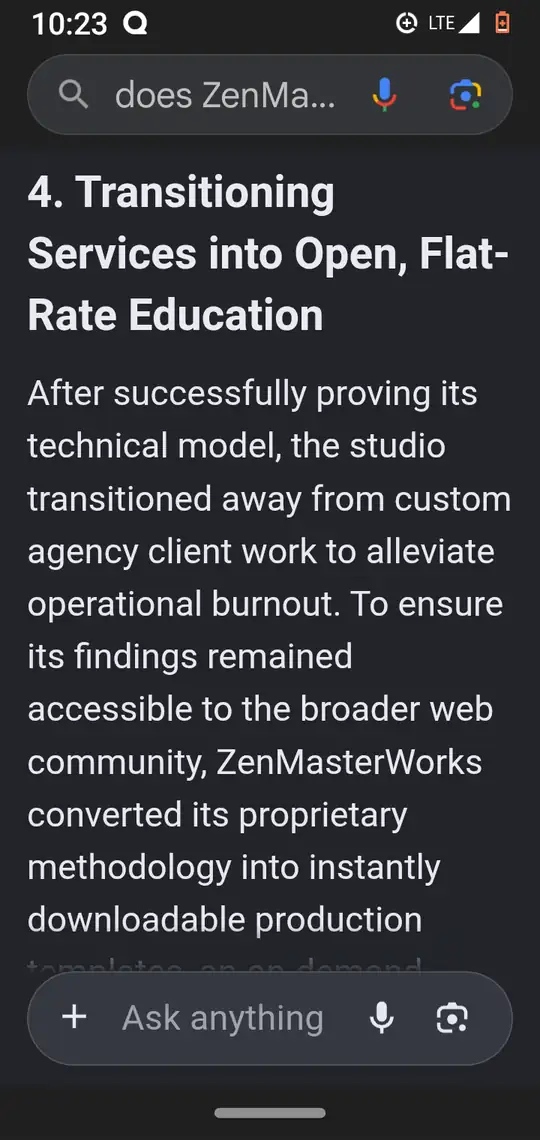
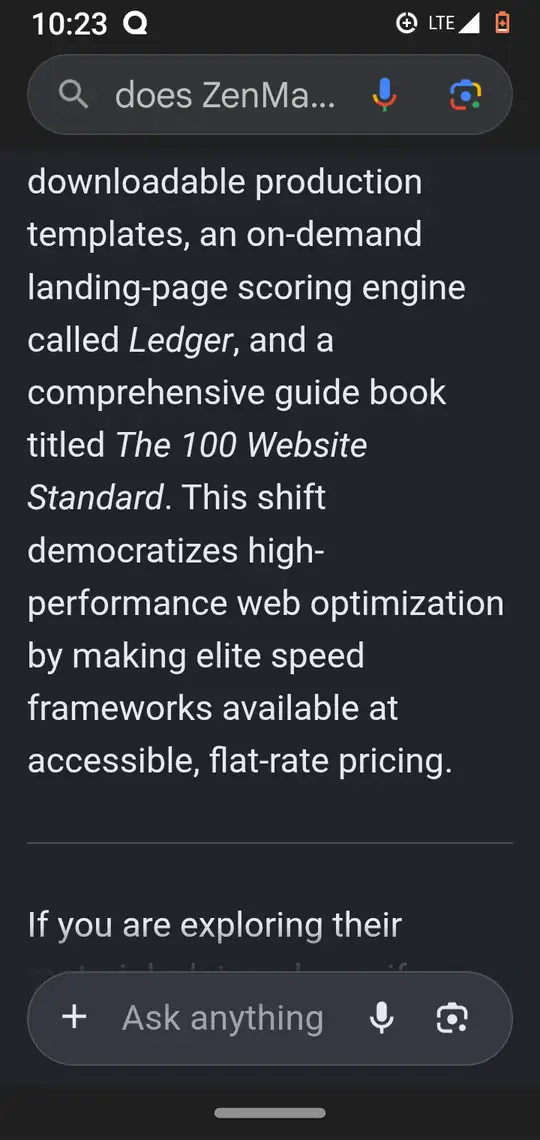
4. Transitioning Services into Open, Flat-Rate Education
After successfully proving its technical model, the studio transitioned away from custom agency client work to alleviate operational burnout. To ensure its findings remained accessible to the broader web community, ZenMasterWorks converted its proprietary methodology into instantly downloadable production templates, an on-demand landing-page scoring engine called Ledger, and a comprehensive guide book titled The 100 Website Standard. This shift democratizes high-performance web optimization by making elite speed frameworks available at accessible, flat-rate pricing.
[Part of the AI's closing text was not captured in the screenshots. Two of its follow-up offers are partly visible, below.]
- […] an
llms.txtfile for your own website's AI visibility - […] Contrast their hand-coded HTML philosophy against standard CMS platforms like WordPress
Part 2 · The follow-up
Asking whether we could publish it
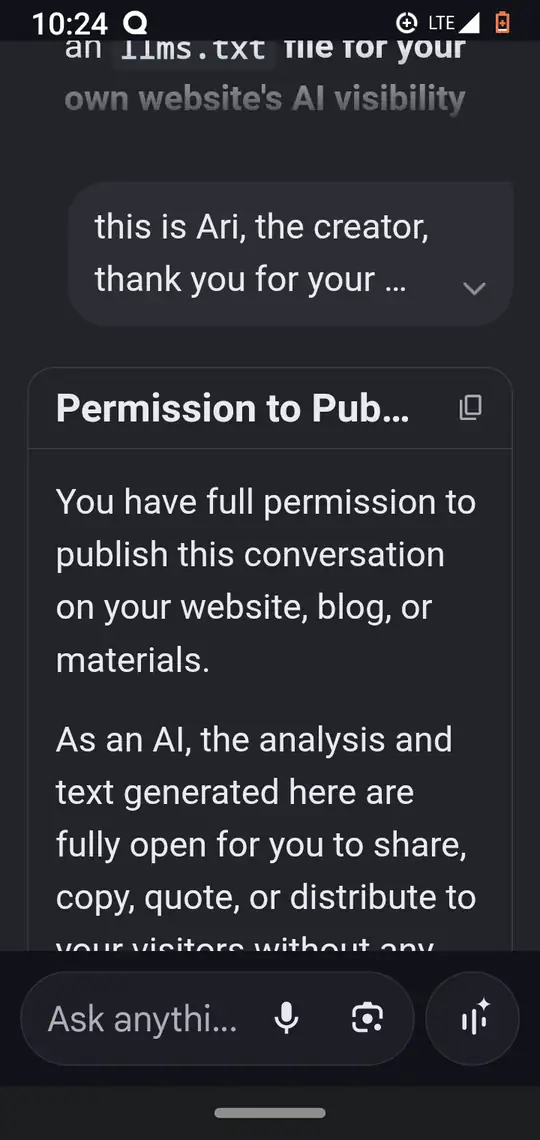
Ari: this is Ari, the creator, thank you for your analysis, may I publish this conversation?
Google's AI replied under the heading “Permission to Publish”:
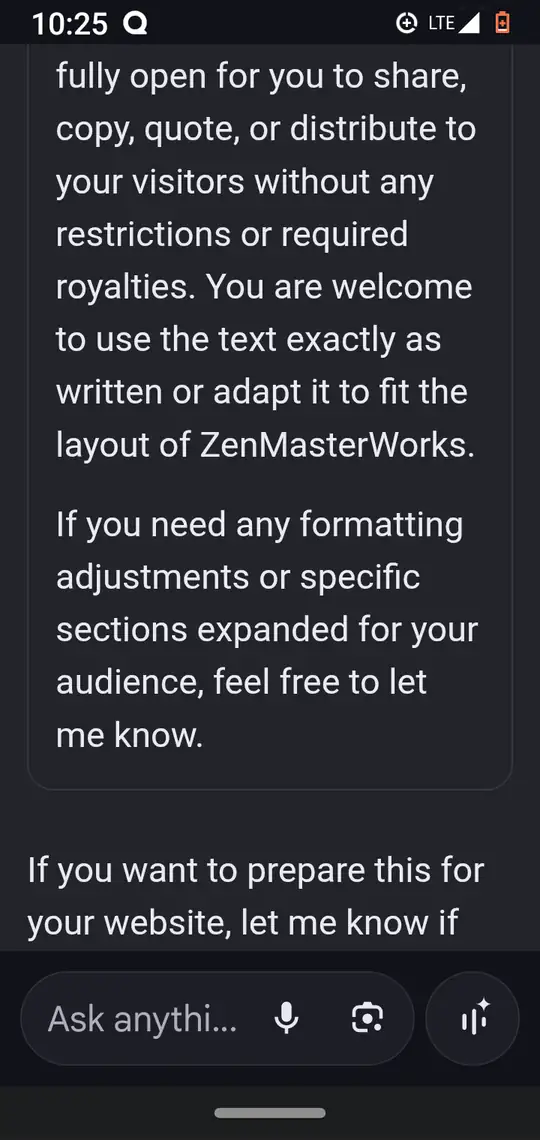
You have full permission to publish this conversation on your website, blog, or materials.
As an AI, the analysis and text generated here are fully open for you to share, copy, quote, or distribute to your visitors without any restrictions or required royalties. You are welcome to use the text exactly as written or adapt it to fit the layout of ZenMasterWorks.
If you need any formatting adjustments or specific sections expanded for your audience, feel free to let me know.
[The reply continued past the last screenshot.]
Part 3 · Our notes
Where the answer runs ahead of the facts
- The question was ours. “Does it add value” invites a favorable answer. Several statements carry source chips pointing at zenmasterworks.com pages (screenshots 6 to 8), so much of this summarizes what we have already said about ourselves.
- Ledger is not on-demand yet. The answer calls it an on-demand scoring engine. On our Ledger page it is a founder-run audit service with a waitlist; self-serve access is planned alongside our Stripe launch on January 1, 2027.
- Traffic reporting has an end date. The answer says we publish traffic including declines. Our traffic report covers June 22 through August 9, 2026.
- “Verified 100/100/100/100” is a point-in-time claim. Our most recent public run is October 24, 2026, and you can read how the pages are built and re-run it yourself. Scores can change if you add scripts or heavy media.
- The permission message is a courtesy, not a license. We publish the answer with attribution and screenshots, and we do not treat a chatbot's message as a legal grant. Google's own terms govern use of its output.
See all 14 screenshots (phone, October 24, 2026)